

Japan-grade medical AI.Last-mile care, globally ready.
The same platform adapts to Brazil’s UBS network, Indonesia’s Puskesmas, India’s Ayushman Arogya Mandir, Mexico’s IMSS-Bienestar, Australia’s Outback services, Canada’s Arctic remote care, and community-health programmes across Africa and Latin America.
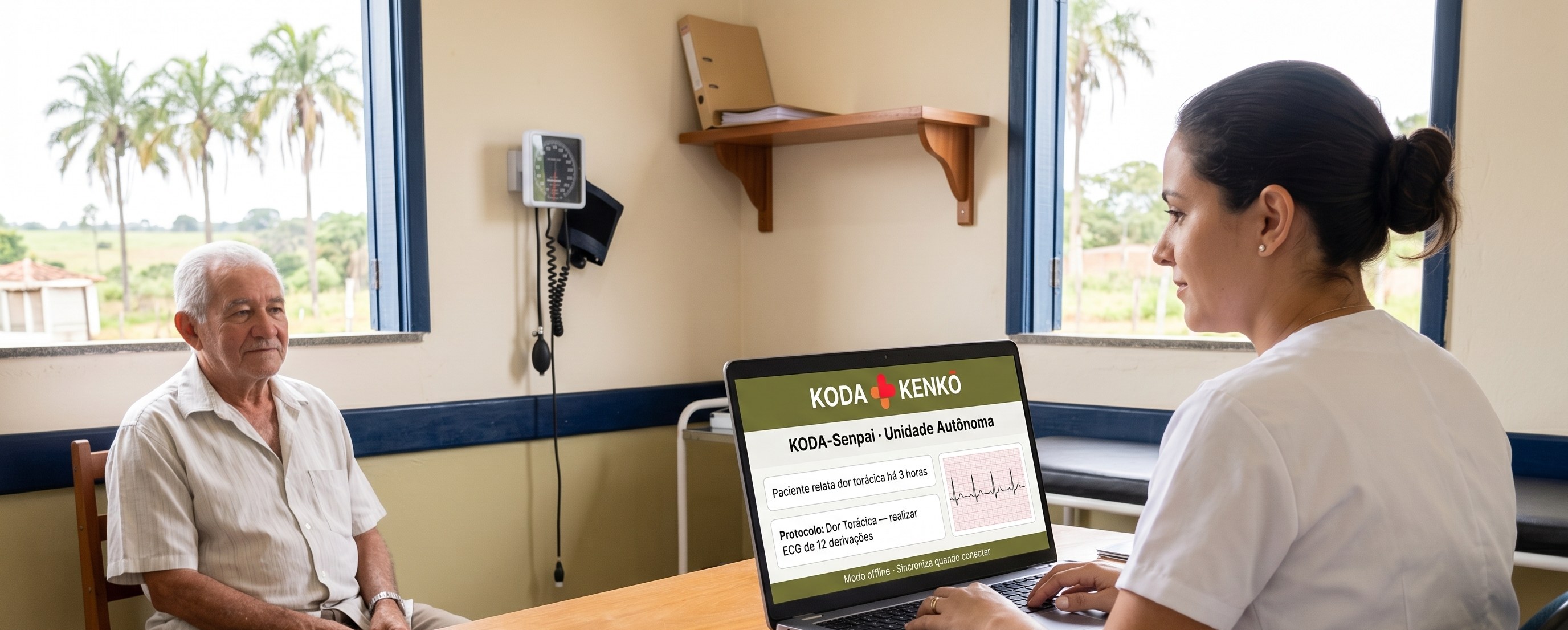
Japan-first, globally adaptable
Built inside Japan.
Designed for the
world’s underserved.
The same engineering discipline that runs in Japanese university hospitals adapts cleanly to the world’s rural and peripheral care systems.
Japan’s ageing-care, multilingual patient flow, and rigorous documentation discipline produced the operational architecture KODA KENKŌ runs on. The same operational architecture — modular products, KoLo OS substrate, edge deployment, audit-by-default, human-reviewed workflows — adapts to the access problem that defines healthcare in most of the world: the nearest specialist is hours away, the connectivity is unreliable, the patient speaks a different language than the clinician, and the medication available locally is not the medication in the textbook.
Nurse-led intake
Structured first-attendance documentation for the cases where a nurse or local health worker is the first point of medical contact.
Telehealth escalation
Asynchronous and synchronous specialist consultation pathways. The local clinic carries the patient context; the remote specialist sees the same record.
Offline / edge operation
Local-first workflows survive intermittent connectivity. Secure synchronisation reconciles edge state with the central platform when the link returns.
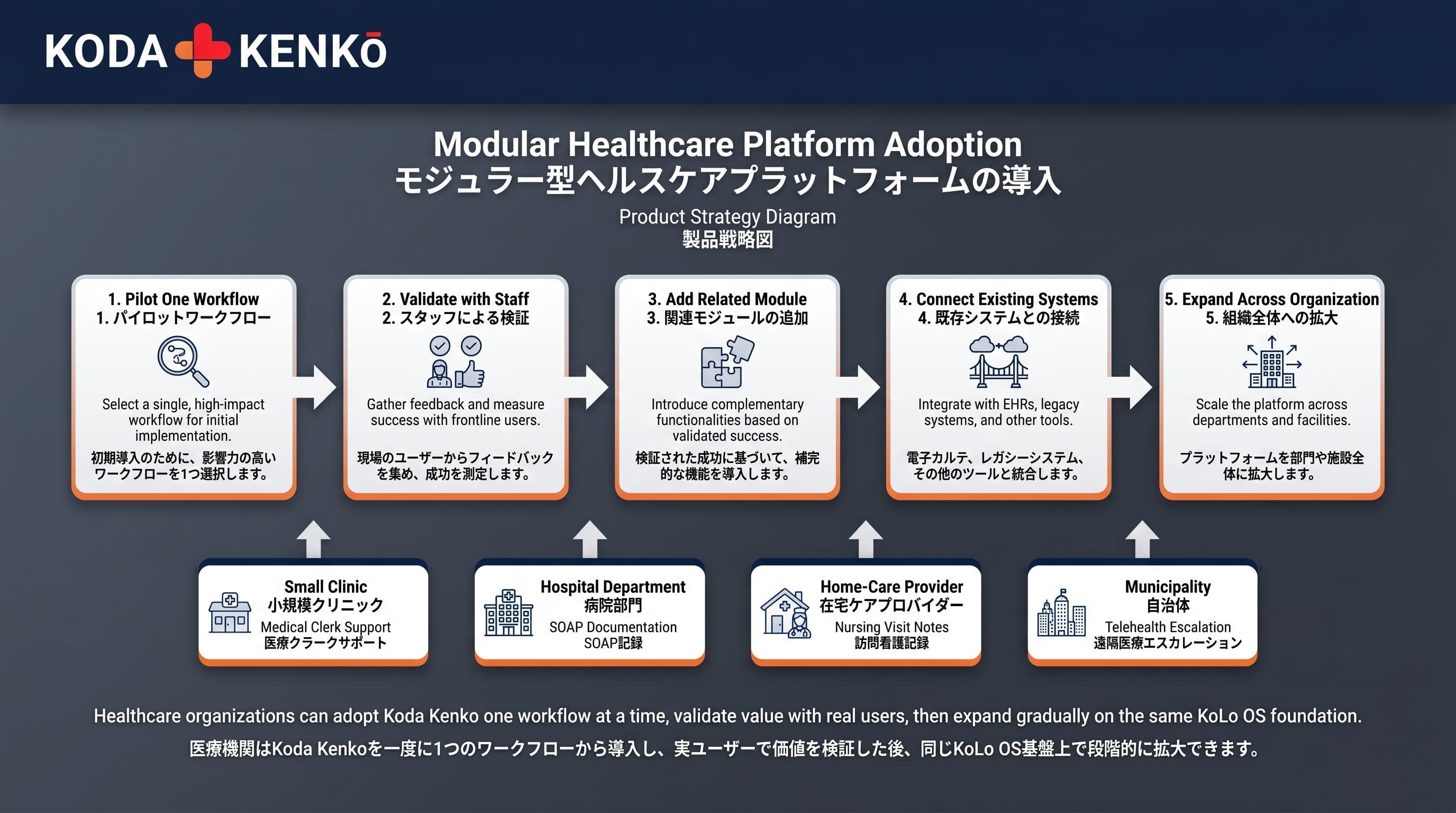
Regions & ecosystems
Adapts to the system
your country already runs.
KODA KENKŌ adapts to existing public-health architectures — not the other way around. Each adaptation respects the ecosystem the country has already built.
- Brazil · ブラジル
UBS · UPA · SUSBrazil runs one of the world’s largest public-health networks. KODA KENKŌ adapts to the UBS and UPA workflow: nurse-led first attendance, structured intake, telehealth escalation to municipal specialists, and offline records that sync when the unit comes back online. - Indonesia · インドネシア
Puskesmas · Posyandu · SatuSehatIndonesia’s Puskesmas and Posyandu networks operate across thousands of islands. KODA KENKŌ supports community-health worker workflows, structured maternal and child-health intake, medication reference for the formularies actually stocked at the village level, and synchronisation through the SatuSehat platform. - India · インド
Ayushman Arogya Mandir · eSanjeevaniIndia’s Ayushman Arogya Mandir centres and the eSanjeevani telemedicine platform extend healthcare into rural districts. KODA KENKŌ supports the community-health worker → district hospital escalation, multilingual patient intake across regional languages, and the medication catalogue across state-level formularies. - Mexico · メキシコ
IMSS-Bienestar · rural clinicsIMSS-Bienestar covers rural and underserved populations across Mexico. KODA KENKŌ supports nurse-led intake in remote clinics, telehealth escalation to state and federal specialists, and the cross-border medication reference that Mexican migrants and returnees frequently need. - Australia · オーストラリア
Outback & Remote-Area Health ServicesThe Australian Outback runs on remote-area nurses, flying doctors, and intermittent satellite connectivity. KODA KENKŌ’s offline-first edge deployment was designed for exactly this operational shape — local-first workflows, asynchronous specialist consultation, and synchronisation when the link returns. - Canada · カナダ
Arctic & First Nations remote careCanadian Arctic and First Nations communities depend on remote clinics, flying nurses, and telehealth links across enormous distances. KODA KENKŌ supports the multilingual intake (English, French, regional First Nations languages where authorised), the long-distance specialist hand-off, and the medication-reference workflows for community-stocked formularies. - Africa & Latin America
Community-health workers · NGO networksCommunity-health worker programmes and NGO-run clinics across Sub-Saharan Africa and Latin America operate under similar constraints: nurse-led care, low-bandwidth connectivity, multilingual patient populations, medication availability that changes monthly. KODA KENKŌ’s edge + telehealth + medication-catalogue stack adapts to each programme’s real shape.
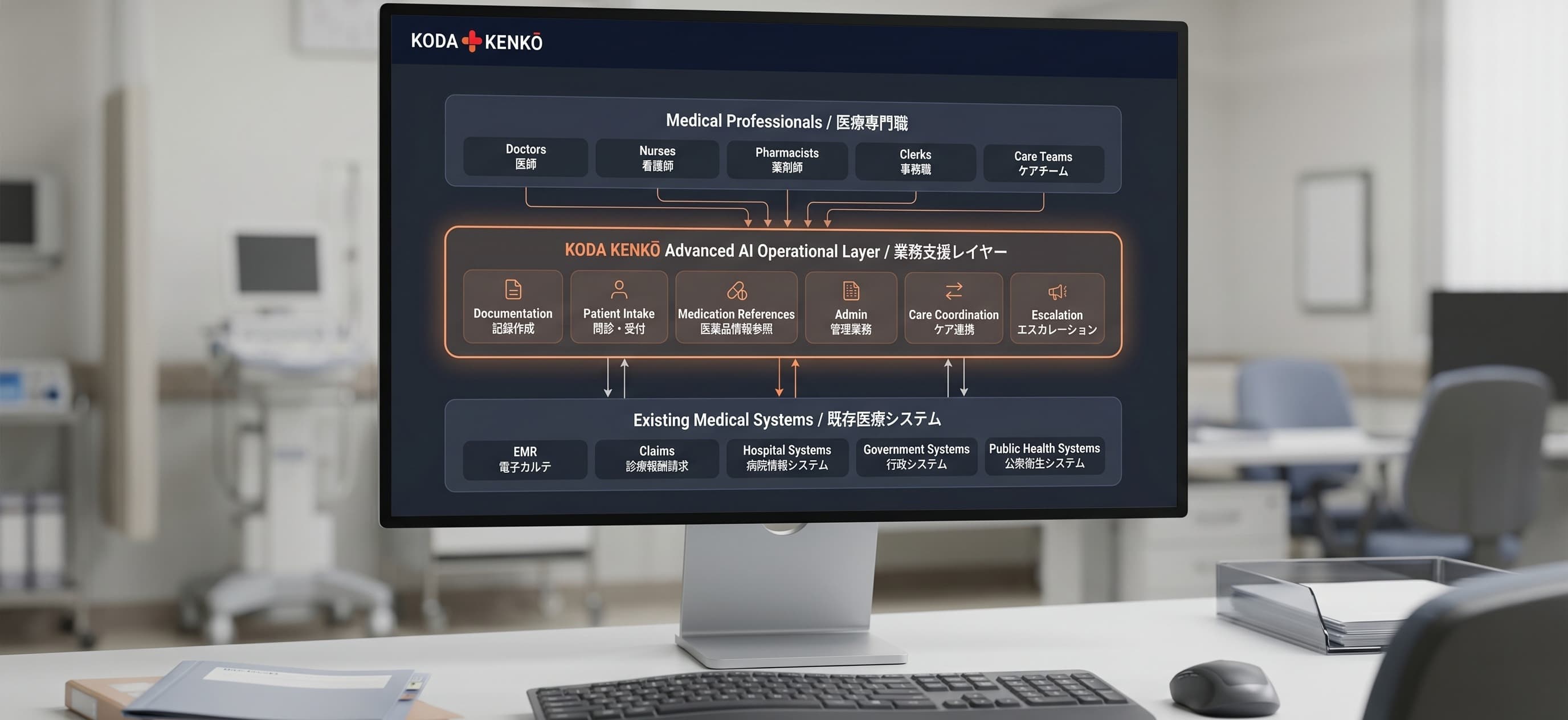
Reference ecosystems only
The ecosystems above are the systems we adapt to.
Not partnerships we claim.
KODA KENKŌ does not claim official integration or partnership with the public-health systems referenced on this page unless formally agreed and announced. The architectures are the operational reality we design for — partnership agreements happen at the institution level, on a deployment-by-deployment basis.
Talk to us about
your country’s adaptation.
20-minute walkthrough with KodaSōken engineering — we open the platform configured for your jurisdiction’s operational reality and answer integration questions in real time.